
A Note from Miguel: One tool never tells the full story
If you've been following this blog for a while, you may remember me discussing the use of continuous glucose monitors.
Essentially, a continuous glucose monitor is a device that's applied to the arm and measures your interstitial glucose level on a continuous basis, 24/7. Each device has its own respective lifespan of 7, 10, or 15-days.
It's painless to insert, and generally very well tolerated. One patient reported a mild skin irritation from the adhesive, but I haven't heard any negative comments otherwise.
CGMs can be helpful, but they only tell one side of the story.
They're also typically only covered by insurance if you have a qualifying diabetes diagnosis. (Too late in my humble opinion)
With permission, I'm sharing some graphs from a male in his early 40's.
He's pre-diabetic with an A1c of 6.0%, and decided to try the continuous glucose monitor out of curiosity.
Here's what we see over the course of a 2-week period:
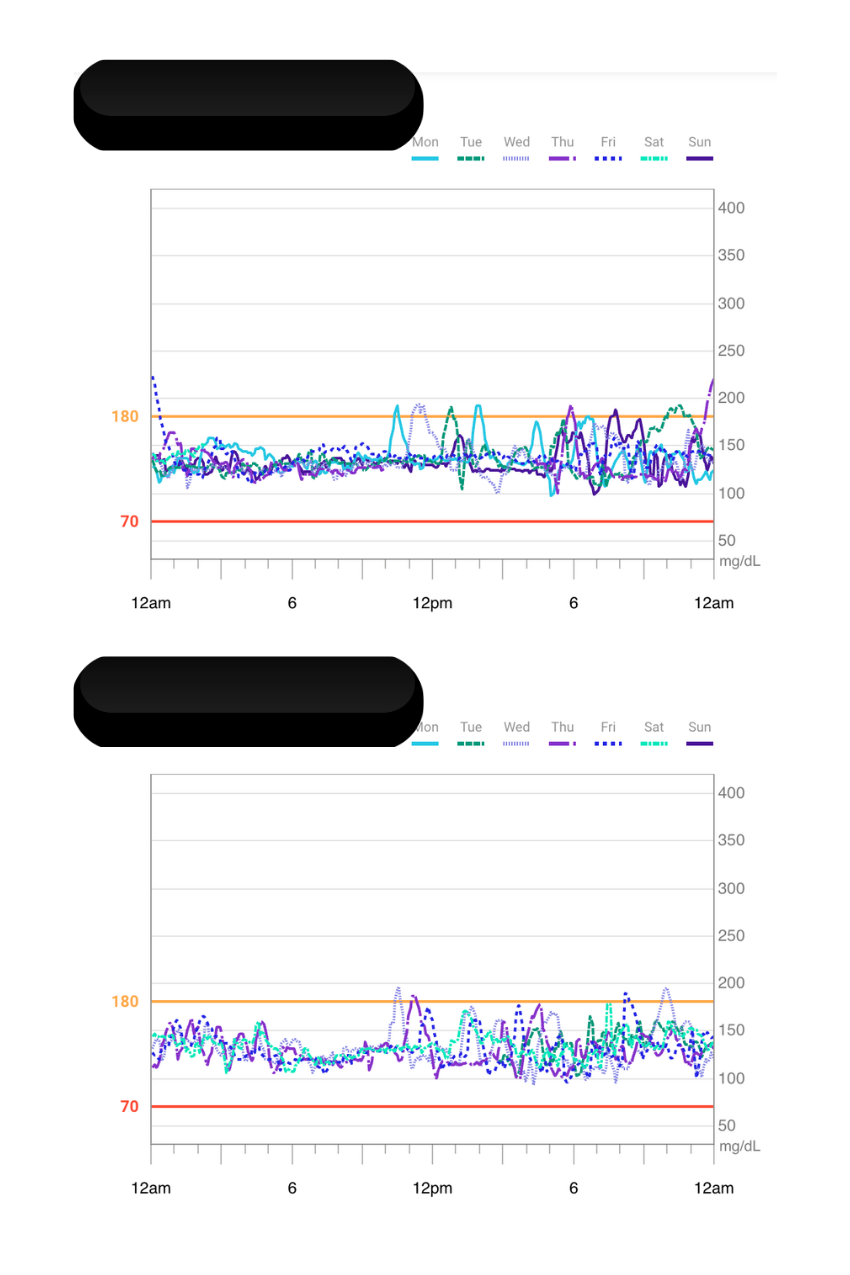
The data shows that the target range of 70-180 mg/dL was achieved 98% of the time. However, the average glucose for 2 weeks was 133mg/dL, which translates to an estimated A1c of 6.5% (within the diabetic range).
An elevated fasting baseline can be driven by sleep apnea, elevated stress (cortisol), the "dawn phenomenon", or an underlying insulin resistance.
This is a great reminder that true health requires looking at the entire health picture.
Let's say this patient purchased a CGM on his own, because these are now readily available. He might look at his app and determine he's "good to go" because 98% of the time his glucose was "in-range." (Keep in mind, that 70-180 mg/dL range is designed for diabetes management, not early prevention!)
What's missing in this instance: labs.
When we looked at his blood work, his insulin level was significantly elevated.
What this tells me is that his pancreas is working in overdrive in order to keep the glucose curve stable. To prevent the sharp or prolonged spikes.
We can't ignore the physiology - the longer the pancreas works in overdrive to pump out insulin, the greater the likelihood that the body's receptor cells become resistant to it. Eventually, the insulin-producing cells in the pancreas become exhausted, overwhelmed, and begin shutting down.
What you're left with is elevated blood sugar and elevated insulin levels, which lead to the metabolic crisis we're experiencing in our country.
Luckily, I suspect he's early enough in the trajectory where I believe this can be reversed to a significant degree, given his level of motivation and enthusiasm.
We have tools, tests, diagnostics, etc.
What really shifts that curve is the way we live. You know that...
MARK YOUR CALENDAR
You're invited to a community walk/run (at your own pace)
Saturday, August 8, 2026 at 9:00am
Location to be announced. STAY TUNED.
--------
INSURANCE UPDATE:
I'm in-network with two new payers and now accepting:
Anthem Blue Cross Blue Shield
CT Medicaid/Husky
Aetna - as of 7/7/26
Cigna - as of 6/26/26
I'm happy to help if you or someone you know is looking to establish with a medical provider.
The best way to start is to schedule an appointment here: https://www.bluezonehw.com/schedule-appointment
Be well,
Miguel
Disclaimer: Information provided is for educational purposes only and is not medical advice. Always consult a healthcare professional for specific medical decisions.
